

This blog isn’t just for show. It explains how resin is made, the sifting process, micron sizes, pressing, what a terpene profile reveals, and how to spot an adulterated product.
No hyperbole, no “premium CBD.” Just methods, numbers, and analyses you can verify. When we’re missing data, we say so.
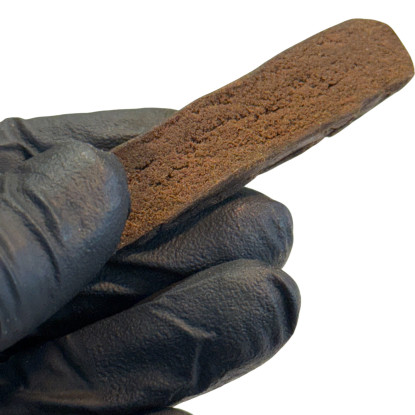
No "red Lebanese" sold in Europe actually comes from Lebanon. The name does not refer to a place of origin; it refers to a color and a texture.
This isn’t just a matter of vocabulary. A product that borrows the name of a region without actually coming from it also borrows its reputation, leaving you with nothing to verify. This is exactly the loophole that reconstituted resins exploit.
We’ve been producing CBD hash since 2020, between the Moroccan Rif and Switzerland, and we sell our own “Red Lebanese.” Here’s what that name actually means, the three ways the product sold under that name is made, and the four indicators that help you tell the difference.


Everyone demands a certificate of analysis. Almost no one knows how to read it. That’s exactly what part of the market is counting on.
A PDF with a lab letterhead is reassuring. But it proves nothing until you’ve verified which batch it corresponds to, what method was used to produce it, and—most importantly— what it doesn’t measure.
We’ve been producing CBD hash since 2020, between the Moroccan Rif and Switzerland. Each bar ships with its own serial number and analysis report, certified by an ISO 17025-accredited Swiss laboratory. So we review these documents every week—both our own and those our retailers receive from elsewhere.
Here are the eight parameters we examine, in order, and what each one helps us identify.


If you’ve ever searched for “CBD and drug interactions,” you know the drill. The liver. Cytochrome P450. A list of drug classes. And the conclusion: ask your doctor.
All of this is generally accurate. But none of these articles answers the one question that matters to someone who takes twenty milligrams of oil at night: at what dose do these interactions actually become a concern?
The answer exists, and it’s quantified. It’s included in an expert report commissioned by the French National Agency for Medicines and Health Products Safety and written by twelve hospital pharmacologists. We’ve read it in its entirety.
This article is not a substitute for medical advice. If you are taking medication, talk to your doctor or pharmacist. The information below concerns safety of use and does not constitute any therapeutic recommendation.


Hash isn't a processed product. It's a part of the plant, separated from the rest and compacted. Nothing else.
No chemicals, no additives, no special formula. Just a sieve, cold temperatures, patience—and a substance that has existed for centuries, long before the term “CBD” even came into use.
We’ve been producing hash since 2020, between the Moroccan Rif and Switzerland. Here’s exactly what it is, what sets it apart from flower, and what “CBD” really changes about it.


Resin doesn't expire. It loses its quality—and much faster than you might think.
Just three months in a plastic bag on a shelf is enough to make what set a good resin apart from an ordinary one disappear. The product remains consumable and compliant: it has simply lost the very quality that made you choose it in the first place.
Since 2020, we’ve been producing our resin between the Moroccan Rif and Switzerland, and we store our batches—just like our partner stores—at temperatures between 16 and 18 °C year-round. Here’s what degrades first, why this specific temperature range is crucial, and the guidelines that actually make a difference.


More than a hundred molecules, including four that everyone talks about and ninety-six that no one is studying.
The word “cannabinoid” is used today to sell just about anything, including molecules that have never even been found in a plant. So it’s worth knowing exactly what the term covers.
We’ve been producing CBD hemp since 2020, between the Moroccan Rif and Switzerland. Here are the three distinct families, the main molecules, and the two concepts that explain most of the rest.
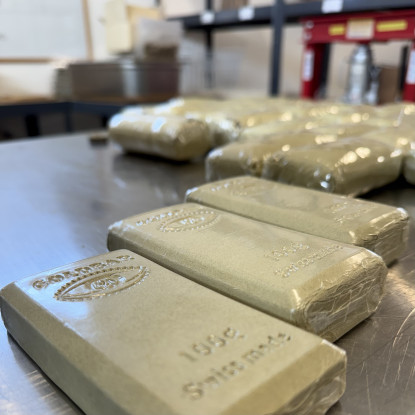
The question to ask a CBD wholesaler isn’t “What’s your price?”—it’s “Where does your raw material come from?”
Most European suppliers buy, repackage, and resell. This isn’t illegal—but it makes all the difference when it comes to batch consistency, the availability of lab reports, and your ability to pass an inspection.
We’ve been producing since 2020, with operations spanning from the Moroccan Rif to Switzerland, and we supply over 300 stores. Here are the criteria we’d apply if we were in your shoes, and the questions that make all the difference right from the first conversation.


Terpenes are the only thing that truly distinguishes two resins with the same CBD content.
They’re also the first to disappear. Poor drying, pressing at too high a temperature, three months in a poorly sealed container—and all that’s left is a number on a label.
We’ve been growing and processing since 2020, between Switzerland and the Moroccan Rif. Here’s what these molecules are really all about, the eight you’ll actually encounter, and how to read a terpene profile without fooling yourself.
Same plant, same glands, two molecules that differ only in the position of a single atom. And yet: one is regulated by law, the other is not.
This tiny difference explains the entire legal market—its purpose, its thresholds, and some of its excesses.
We’ve been growing and processing since 2020, between the Moroccan Rif and Switzerland. Here’s what really sets these two molecules apart, how it affects what you’re buying, and why the legal threshold is more nuanced than a simple percentage.
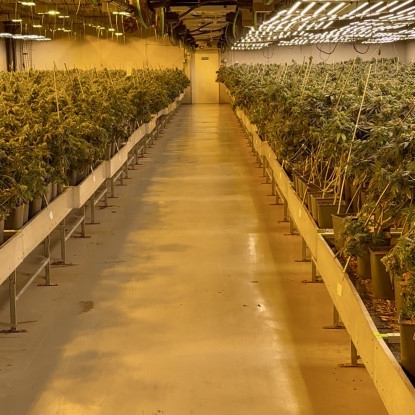
A CBD flower is first judged by its feel and smell. The listed percentage comes far behind.
This is the opposite of what the market tells us, where everything boils down to a percentage. But a percentage can be manipulated—the density, moisture content, and aroma of a flower cannot.
We’ve been growing in Switzerland since 2020 and we screen our own harvest. Here are the seven criteria we use ourselves, from the most visible to the most technical, and what each one reveals about the work behind the flower.
The problem with CBD in tobacco shops isn’t the salesperson. It’s the amount of time the product spends on the shelf.
A tobacco shop owner isn’t doing anything wrong by selling CBD. But a fresh plant-based product doesn’t behave like a pack of cigarettes, and it’s this difference that explains most of the disappointments.
We’ve been producing since 2020 and supply more than 300 stores. So we see both sides of the story. Here’s what actually varies depending on the retail location, and the questions to ask no matter where you shop.


Hydroponics doesn't produce a better plant. It produces a more predictable plant.
This is a nuance that the market carefully ignores, because it’s more marketable to present it as a guarantee of quality rather than just one technical choice among many.
We’ve been growing in Switzerland and screening our own harvest since 2020. So the question that interests us isn’t “which is the best growing method,” but rather what each method yields once the plant has been screened. Here’s what we’ve observed.


“Not prohibited” and “authorized” do not mean the same thing. This entire market hinges on that distinction.
Every ban is followed, a few weeks later, by the emergence of a related compound that the regulation does not cover. This is neither a coincidence nor a failure to enforce the law: it is the very way the system works.
This article does not address the effects or risks—we’ve dedicated an entire article to what these compounds actually cause. It explains the economic and regulatory mechanisms that enable their existence, and what professionals need to check within their supply chains.
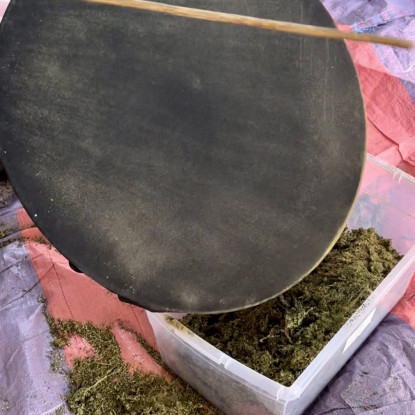
A seller who tells you “73 microns” isn’t telling you the quality of their resin. They’re telling you the size of a hole.
The number on a sieve refers to what passes through it, not what remains on top. That’s the whole difference—and it explains why this number has become the most common selling point in the CBD hash market, and the most meaningless one once taken out of context.
We’ve been sifting between 70 and 153 microns since 2020, from the Moroccan Rif to Switzerland. Here’s what these numbers really mean, how they affect taste and price, and why we never throw anything away.


You can assess a resin in five minutes, without any equipment, as long as you know what to look for.
The problem isn’t a lack of information—it’s that it’s almost always written by people who sell without actually producing anything. The result: vague criteria, adjectives, and never a concrete step you can take yourself.
We’ve been producing resin since 2020, between the Moroccan Rif and Switzerland. Here are the six indicators we use ourselves, in the order you should check them—and the red flags that should make you set the product aside.
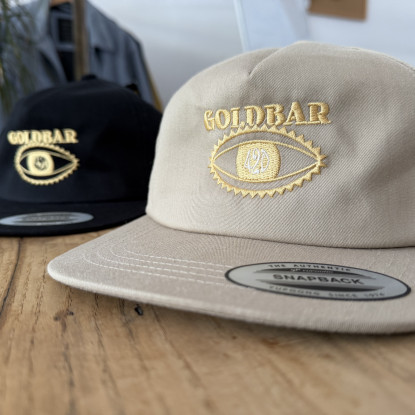
420 is not a police code, nor is it the number of molecules, nor is it a reference to a song. It was the time five California high school students agreed to meet in 1971.
The real story is more mundane than the legends surrounding it—and far more interesting, because it explains how a code word among teenagers became a global date.
Our brand bears this number. We might as well explain what it really stands for, what it doesn’t stand for, and what it means today for a producer operating within the law.


Many people who want to cut back on THC aren’t looking to quit entirely. They’re looking to regain control.
This is an important distinction, and it explains why CBD resin appeals to so many people: it preserves the ritual, the experience, and the taste—without the psychoactive effects.
It’s neither a treatment, nor a method of withdrawal, nor a promise. It’s a substance, and what makes it special is that, if it’s made well, it feels just like what you’re used to.
We’ve been producing resin since 2020, between the Moroccan Rif and Switzerland. Here’s what it actually changes, what it doesn’t change, and who to turn to when it’s not enough.
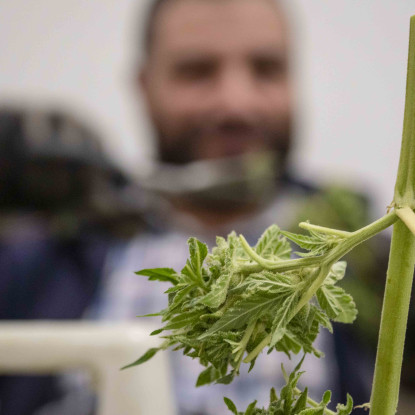
There’s no single “best” way to consume CBD. There’s the method that best suits what you’re looking for.
A fast, short-lasting effect is completely different from a slow, long-lasting one. A method that preserves the aromas isn’t necessarily the most portable one . The choice isn’t about quality—it’s about how you plan to use it.
We’ve been producing flowers and resins since 2020. We don’t sell oils, capsules, or cosmetics—and we’ll be upfront with you when a method isn’t our specialty.
Here are the seven ways to consume CBD, what they actually offer , and how to get the most out ofresin—the point that almost no one explains.
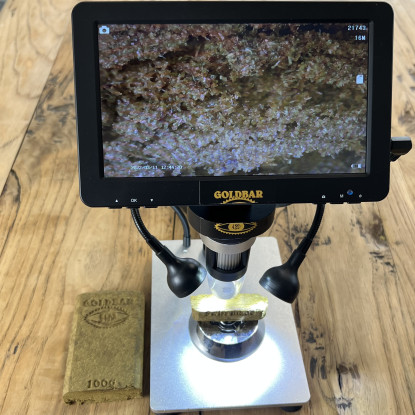
We sell CBD resin and flowers. We don’t sell medicine—and this article isn’t going to make any promises.
The CBD market is saturated with promises. Sleep, pain, anxiety: you read just about everything and its opposite, often written by people who have a product to sell. We have one, too, and that’s precisely why we prefer to be precise.
Here’s what we know about CBD, what we think we know, and what no one can honestly claim to know for sure today.
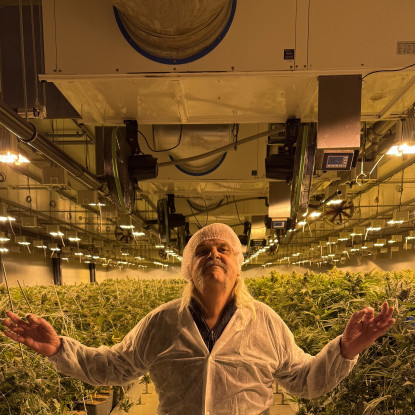
Switzerland, France, and the European Union: CBD is legal in all three—but not under the same rules.
The same product can be perfectly legal in Geneva and illegal in Annemasse, just a fifteen-minute drive away. This isn’t just an administrative technicality: it’s a difference that affects the product’s composition, its price, and what you’re allowed to do with it.
We’ve been producing CBD in Switzerland since 2020 and exporting it to France. Here’s what really sets these markets apart—and how to verify that a product sold as “Swiss” actually is.


CBG won't make you feel anything. And yet it's everywhere.
In just two years, this molecule has carved out a niche in part of the CBD market—under names like “CBG pollen,” “CBG hash,” and “CBG flower.” It’s neither a consumer trend nor a scientific discovery.
It’s a technical solution to a regulatory problem.
CBG has a unique property: a plant rich in CBG contains almost no THC. Flawless analysis, guaranteed compliance, no legal risk.
This property has made it the ideal tool—in both the legal and illegal markets. Here’s why.
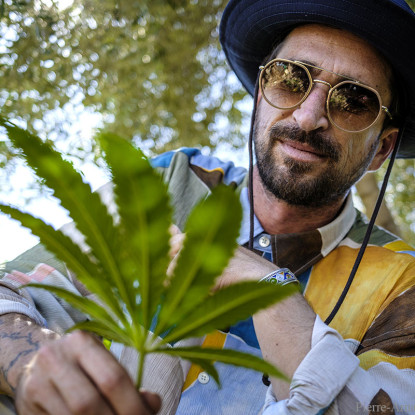
Cannabis is an extraordinary plant.
For decades, passionate growers have dedicated their lives to understanding its strains, terpenes, cannabinoids, and the best ways to grow it naturally. They work for months to unlock the potential of a living plant . Their goal has never changed: to offer natural CBD that’s truly worthy of the name.
Today, part of the market is heading in a direction that no longer has anything to do with this plant—or with those who respect it.
This article is not a sales pitch. It is a warning. If you’ve been using CBD purchased in stores or online since 2024, take ten minutes to read it.
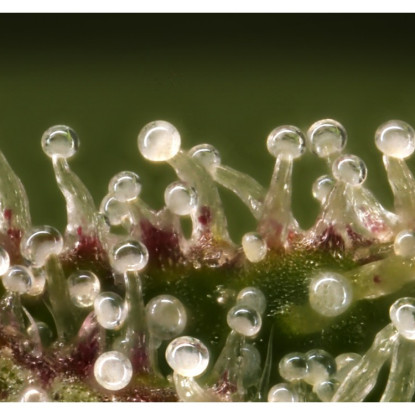
A plant never produces anything just to please us. If cannabis becomes covered in resin, it’s because it needs it to stay upright.
That shiny frost covering the flowers is trichomes: microscopic glands that concentrate nearly all of the plant’s cannabinoids and terpenes. Everything else—the stem, the large leaves, the branches—contains almost none of them.
Understanding what they’re for, how they mature, and why they degrade means understanding everything else: why an outdoor plant smells stronger than an indoor one, why the harvest date completely changes a strain’s profile, and why a good flower can produce mediocre resin.
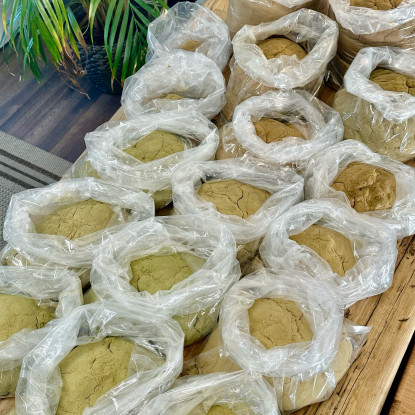
The word “pollen” is probably the biggest misnomer in the CBD market.
This isn’t a matter of purism. Botanically speaking, what’s sold under that name has absolutely nothing to do with pollen —and this confusion suits a lot of people just fine.
Kief, charas, resin, hashish, pollen: these words refer to different things, with different origins and production methods. Mixing them up is exactly what allows a seller to make you pay for one product when you’re actually getting another.
We’ve been producing hash since 2020. Here’s what each term actually means.


Making your own hash isn't complicated at all. Doing it right, though, is another story.
The principle can be summed up in one sentence: separate the trichomes from the plant material without damaging them. No solvents, no chemicals, no lab equipment. Just a sieve, cold temperatures, and patience.
What separates a decent result from a disappointing one isn’t the equipment— it’s the temperature, humidity, and restraint. Three things that almost all beginners get wrong.
We’ve been producing hash since 2020, in Morocco and Switzerland. Here’s what really works on a small scale—and the mistakes that ruin good raw material.


Between a seed and a block of hash, six months pass and about ten decisions are made. Any one of them could ruin everything.
The plant produces a defensive resin. People separate it, sort it, and press it. That’s all—and it’s already a lot.
We’ve been following this entire journey since 2020, from the Moroccan Rif to Switzerland. Here are the six steps, in order, with a link to the details of each one.


Hash, also known as hashish or resin, is one of the oldest cannabis-derived products. It is made by isolating the resin-rich trichomesfrom the plant and then compressing them into a concentrate.
Hash is nothing more than trichomes separated from the plant material and pressed together. Dating back several millennia, this substance depends entirely on these microstructures that cover the plant.
But whether it’s dry sifting in Morocco’s Rif Mountains, bubble hash made with ice-cold water , or hand-rolled charas in the Himalayas, the methods differ in both technique and result.
We’ve been producing hash since 2020, in Morocco and Switzerland. Here’s how it’s actually made : the five methods, the pressing process, and what sets an exceptional resin apart from a run-of-the-mill product.


There are some names that need no explanation. Ketama is one of them.
Mention it to any connoisseur—in Europe, the Maghreb, or elsewhere—and they’ll know exactly what you’re talking about. Ketama is the global benchmark for hashish, the standard against which everything has been measured for decades.
But behind the myth lies a very concrete geographical reality: a mountainous region in the Moroccan Rif, at an altitude of over 1,500 meters, where rare natural conditions combine with expertise passed down from generation to generation.
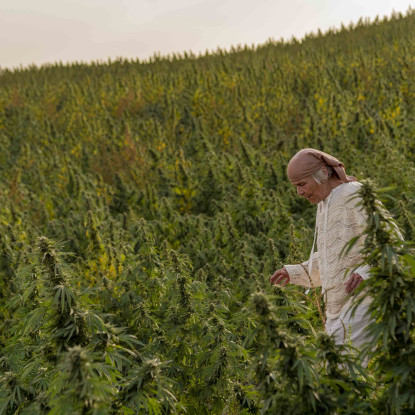
That’s where we grow our crops. Not traditional hashish— but legal CBD hash, using genetics selected in Switzerland and planted in these very same soils. And we’ve been filming this work for years: a good portion of our @goldbar420 videos were shot there.
This is what makes Ketama unique, and what we can actually produce there today.


We get asked this question almost every week. And the answer isn’t what you’d expect.
Moroccan CBD hash and Swiss CBD hash aren’t two different quality levels. They represent two production philosophies —one shaped by the terroir, the other shaped by a controlled environment. Each yields a different product, and neither is inherently superior to the other.
We’ve been producing both since 2020: numbered ingots from Morocco’s Rif region and indoor-grown resins sifted in Switzerland. So we have the lab results for both right in front of us—and they reveal something specific.
Here’s what really sets them apart, backed by the numbers, and how to choose the one that’s right for you.


In 2026, it’s just as easy to make fake resin as it is to make fake hash.
The CBD hash market is flooded with products that mimic the appearance of real resin without its purity, aromas, or authenticity. Crude oil cuts,isolate fortification, texturizing agents, synthetic terpenes: the techniques are well-known, and they’re easy to spot.
We’ve been producing CBD hash since 2020, in Morocco and Switzerland. We know what’s out there on this market— and we know how to spot it.
Here are the five concrete red flags —the ones that sellers of fake resin hope you don’t know about.
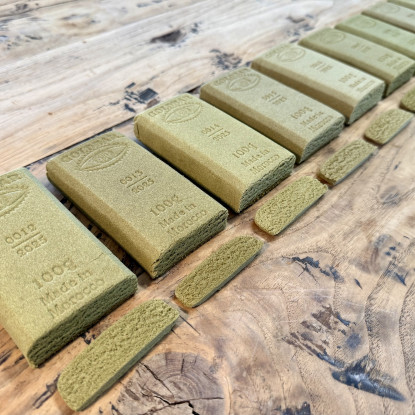
There’s one figure that almost no CBD seller discloses. Yet it explains everything.
Resin accounts for between 1.5% and 15% of the total mass of dried flowers used.
In other words: to produce 10 grams of hash, you need between 65 and 650 grams of flowers, depending on the strain, the extraction method, and the desired quality.
This single figure is enough to understand the market. It explains why certain prices are impossible, what truly justifies a premium price, and what lies behind abnormally cheap hash.
We’ve been producing CBD hash since 2020, between the Moroccan Rif and Switzerland. Here’s the calculation, straight up.
