- Limited edition

Joy Fruit x Cannatonic CBD Hash No. 0012 — 22.6%
Our highest grade, with pepper notes that stand out more than the wood.
CHF12.90
Or CHF6.45 per g

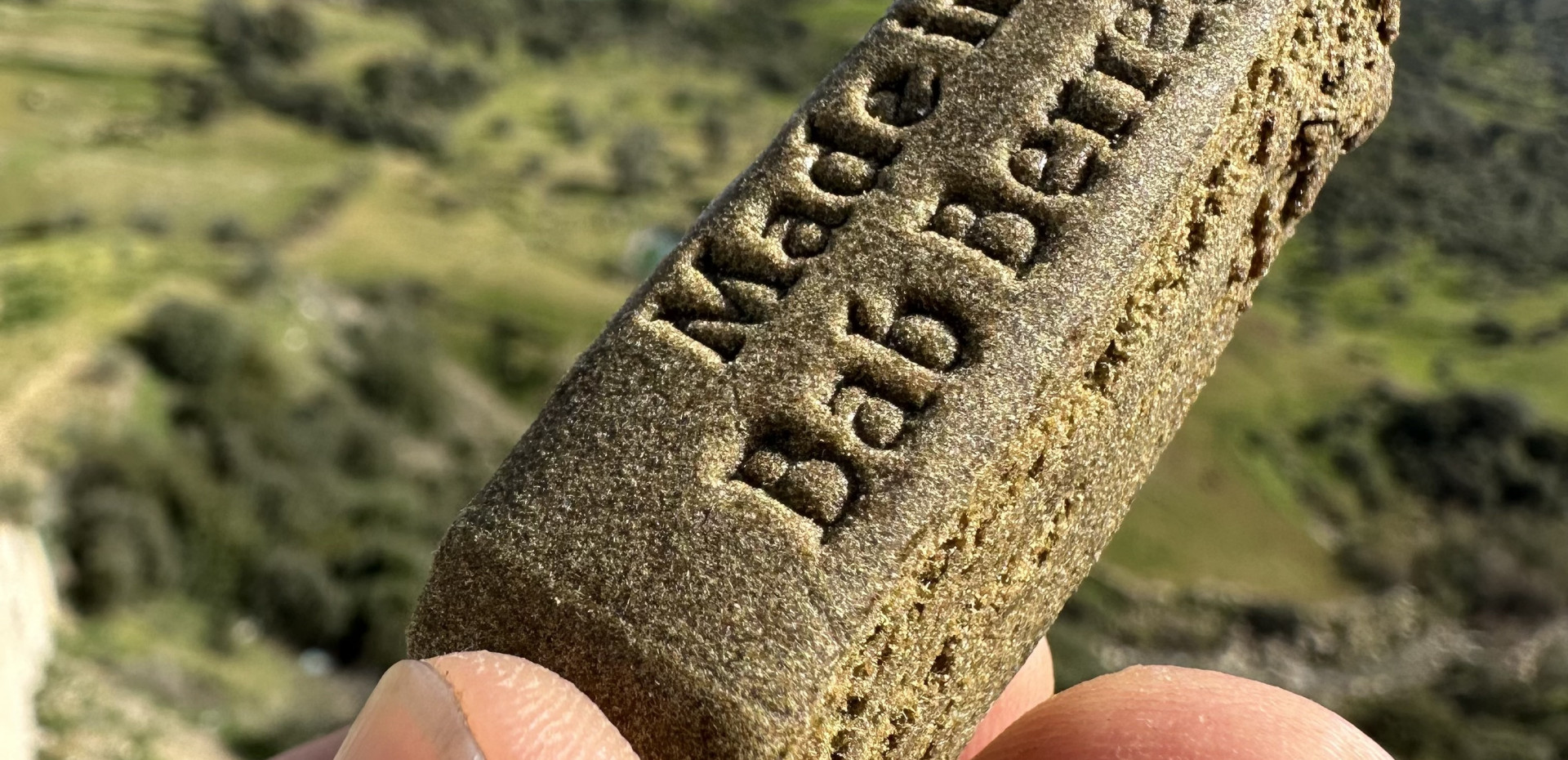
Each lot comes from a named plot at a known elevation, harvested in a single season. One harvest per year —once a lot is sold out, it is not restocked.


Just like wine or coffee, hemp grown outdoors reflects its soil, altitude, and climate. The terpene profile of CBD hash varies from one plot to another—and this can be measured.
This isn’t just a story: from one terroir to another, the dominant terpene changes, and analysis of each batch confirms it.
Three cultivation methods, three expressions:
All our CBD hash is extracted using dry sifting at 153 microns —no water, no solvents, no heat. Using the “tam tam” method in the Rif, and the “pollinator” method in Valais.
→ Why 153 microns? Understanding sieve sizes
→ What are terpenes and why do they matter?
A mountain range in the Moroccan Rif, two Goldbar420 terroirs
There are some names that need no explanation. Ketama is one of them. Mention it to any connoisseur, whether in Europe or the Maghreb—they’ll know exactly what you’re talking about.
Behind the name lies a very concrete geographical reality: a mountainous region in the Moroccan Rif, in the province of Al Hoceima, at an altitude of over 1,500 meters. Cedar trees, steep slopes, harsh winters, and dry summers. It is this climate—not some legend—that explains the reputation of its resins.
Ketama isn’t a village but a mountain range that encompasses several cultivation areas. Two of them are featured in our Moroccan editions: Ounas Edin and Bab Berred.
There, we produce legal CBD hash —not traditional hashish—using genetics selected in Switzerland, planted in these same terroirs, with GACP-certified partner farms. And we’ve been filming this work for years: a good portion of our @goldbar420 videos were shot there.

This is our main growing region—and the most spectacular one. Ounas Edin stretches at the foot of Mount Tizirane, in the Ketama Mountains, across plots that rise rapidly in elevation —from 1,100 to 1,750 meters.
There, we produce legal CBD hash from genetics selected in Switzerland and planted on these same lands, in collaboration with GACP-certified partner farms.
17 hectares spread across elevations ranging from 1,100 to 1,750 meters
A terroir defined not by altitude, but by slope. That’s what makes Ounas Edin unique: there’s a vertical drop of several hundred meters between the lowest and highest plots. The same plant doesn’t yield the same results depending on where it grows.
The higher up you go, the more the plant has to fend for itself. More intense UV rays, colder nights, and more pronounced temperature fluctuations. The plant’s response is always the same: it produces more trichomes, richer in terpenes.
An isolated valley. Protected by the surrounding terrain, far from neighboring crops and pollution, Ounas Edin preserves the aromatic purity of its harvests.
Lively soil, cultivated without synthetic inputs using methods passed down from generation to generation.
This is where most of our Moroccan editions are grown—and where we filmed a large portion of our @goldbar420 videos.
- HQ CBD Hash x Lemon No. 0018 — dry sift from Ketama, with resinous and woody notes
- CBD Hash Blue Berry x Cannatonic No. 0019 — 2.0% terpenes, blueberry and floral
- OG Beldi No. 0002 — our first Moroccan release

At the foot of the Ketama Mountains, Bab Berred is one of the two regions where our Moroccan products are sourced. A mountain village with slopes covered in cedar trees, and a tradition of sifting passed down from generation to generation.
There, we produce legal CBD hash from strains selected in Switzerland and grown on this very land, in collaboration with GACP-certified partner farms.
2.5 hectares at an elevation of 1,200 to 1,550 meters
A legacy of sifting. For centuries, Bab Berred has carried on the tradition of “tam tam” —the traditional hand-operated sieve. We apply this expertise to CBD hemp, sifting it dry at 153 microns.
A mountain climate. Moderate temperatures, abundant sunshine, and significant temperature variations between day and night. The plant adapts to these conditions and produces more trichomes.
Mineral-rich soils, cultivated without synthetic inputs by our partner farms.
A distinctive aromatic profile. The plots at Bab Berred yield dense resins with profiles marked by pine and resinous notes. Our No. 0020 was measured there at 0.35% alpha-pinene.
This isn’t just a story: the dominant terpene varies from one terroir to another, and analysis of each batch confirms this.
- Orangella x Gelato CBD Hash No. 0020 — the Ketama forest in ingot form, with a fresh pine aroma
- CBD Hash Amnesia × Harlequin No. 0010 — the liveliest pine scent in the lineup
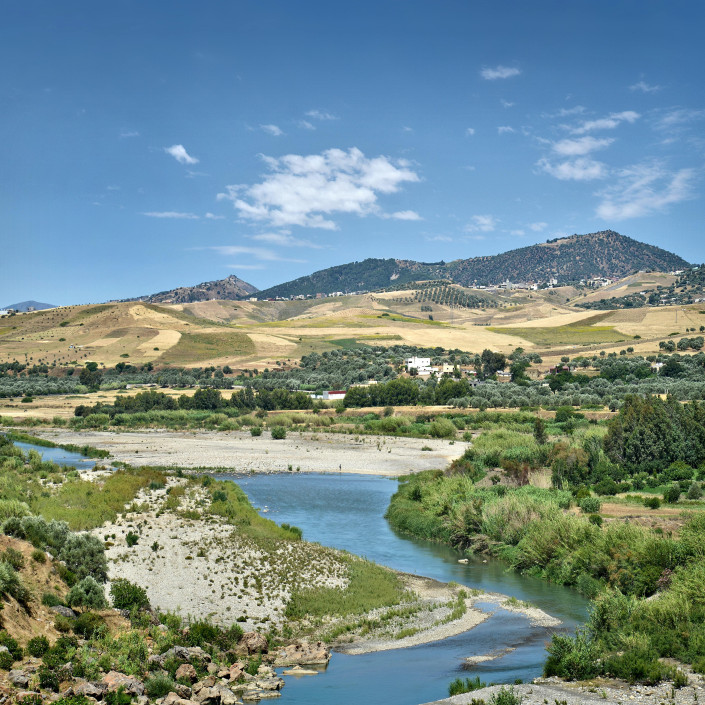
Further south in the Rif Mountains, in Laazayeb, Taounate is our third Moroccan growing region. Flat land, a much lower elevation than Ketama—and an aromatic profile that’s completely different.
There, we produce legal CBD hash from strains selected in Switzerland and grown on these very lands, in partnership with GACP-certified farms.
13 hectares at an elevation of 600 meters
A moderate Mediterranean climate. Without the extreme temperature fluctuations of the High Rif: hot summers, mild winters, and a longer growing season.
Flat, even land that’s easy to work, allowing for consistent cultivation across the entire plot.
A distinct character. That’s what makes this terroir so special: a 1,100-meter elevation difference separates Taounate from Ketama, and you can really tell the difference on the nose. While the High Rif yields pine and resinous notes, Taounate produces softer, rounder profiles.
The same standards. Same Swiss genetic selection, same GACP-certified partner farms, same dry sift using a tam-tam sieve at 153 microns.
This isn’t just a story: from one terroir to another, the dominant terpene changes, and the analysis of each batch confirms it.
- Kompolti CBD Hash No. 0011 — limited edition from Laazayeb

It’s the counterpart to Morocco. Where the Rif offers a vintage, Valais offers consistency. Indoor cultivation, an environment controlled down to the degree, and the same extraction standard.
One key difference: in Morocco, we work with partner farms. In Valais, we handle the entire production process ourselves, from seed to bud.
Indoor, well-maintained, available year-round
Consistency. The same terpene profile from one batch to the next, all year round. Your reference points stay the same—that’s what someone who’s found their resin and wants to find it again is looking for.
No seasonal variations. Moroccan hash is a vintage product: one harvest, one batch, then the wait. Swiss hash is available year-round.
The Pollinator, at 153 microns. The same fine mesh as the Tam Tam, applied to a mechanical extraction process. Dry, without water, solvents, or heat.
Genetic selection. This is where the seeds we later plant in the Rif are born. Valais isn’t just a production region—it’s our varietal laboratory.
The same standard. Full spectrum, zero isolates, zero distillates, zero added terpenes. Batch number and analysis for each production run.
- Peanut Butter CBD Hash — dry sift 153µ, 100% Swiss
- Amnesia Indoor CBD Hash — Amnesia flower trichomes, fine and easy to crumble
→ The entire lineup: Swiss CBD Hash · Swiss Indoor CBD Flowers
Same soil, same high standards. Our indoor CBD flowers are grown in Valais, dried slowly, and their terpene levels are measured batch by batch. These flowers are the source of our Swiss CBD hash.


Each bar of CBD hash, hand-molded and stamped, is made exclusively from the plant’s natural trichomes, which have been dry-sifted and pressed. What you read on the product page is exactly what you consume.
The world’s leading exporter of legal cannabis, based in Morocco. More than 300 official retailers in Switzerland and across Europe. 113,000 subscribers and millions of views. A community built on quality— not advertising.
Each terroir-specific CBD hash has a unique serial number, and each indoor batch has a lot number. Cannabinoid and terpene analyses are available online before purchase, batch by batch, without exception. An honest producer has nothing to hide.
From seed to finished bar, our entire production process is filmed and available on ourInstagramand YouTube channels @goldbar420. It’s not just a pretty picture of the finished product —here, you can follow our work with complete transparency.
