1. Density
First and foremost, hold the flower in your hand. It should feel heavy for its size and spring back into shape after being gently pressed.
A flower that’s too airy indicates that it was grown too quickly, didn’t get enough light, or is a high-yield variety. A flower that’s hard as a rock, on the other hand, has often been compressed after drying—a process that crushes the trichomes.
The right indicator is firm yet supple: it resists, then gives way, then springs back.
2. Moisture Content
This is the most crucial—and most overlooked—criterion. It’s tested on the stem, not the flower.
Bend a small side stem:
- Ifit snaps cleanly with a sharp crack —it’s too dry. The terpenes have evaporated, and the taste will be flat and harsh.
- It bends without breaking, like rubber —too moist. Risk of mold in the short term.
- It snaps with a little resistance —that’s the sweet spot.
A flower that’s too dry is beyond salvage. No amount of storage will bring back lost terpenes.
3. The smell
Gently rub the surface between two fingers, then smell it. The aroma should be released by the friction, not just present when cold.
What matters isn’t the intensity but the complexity: a good flower has multiple layers, a base note, and a top note. A single, overpowering scent—always identical regardless of the strain—often indicates an added aroma.
The absolute red flag: a smell of hay, mustiness, or dampness. Hay indicates poorly degraded chlorophyll, and thus a sloppy drying process.
To understand what you’re smelling, our article on reading a terpene profile details the main aroma families.
4. The Quality of the Trimming
Look at how the small leaves around the calyxes have been trimmed. Careful trimming removes the leaves without cutting into the flower.
Two common flaws:
- Too many leaves left on —less resin, harsher burn;
- Aggressive machine trimming — surface trichomes are stripped away, leaving the flower looking smooth and dull.
You can recognize a hand-trimmed flower by its imperfections, not its perfection.
5. Visible trichomes
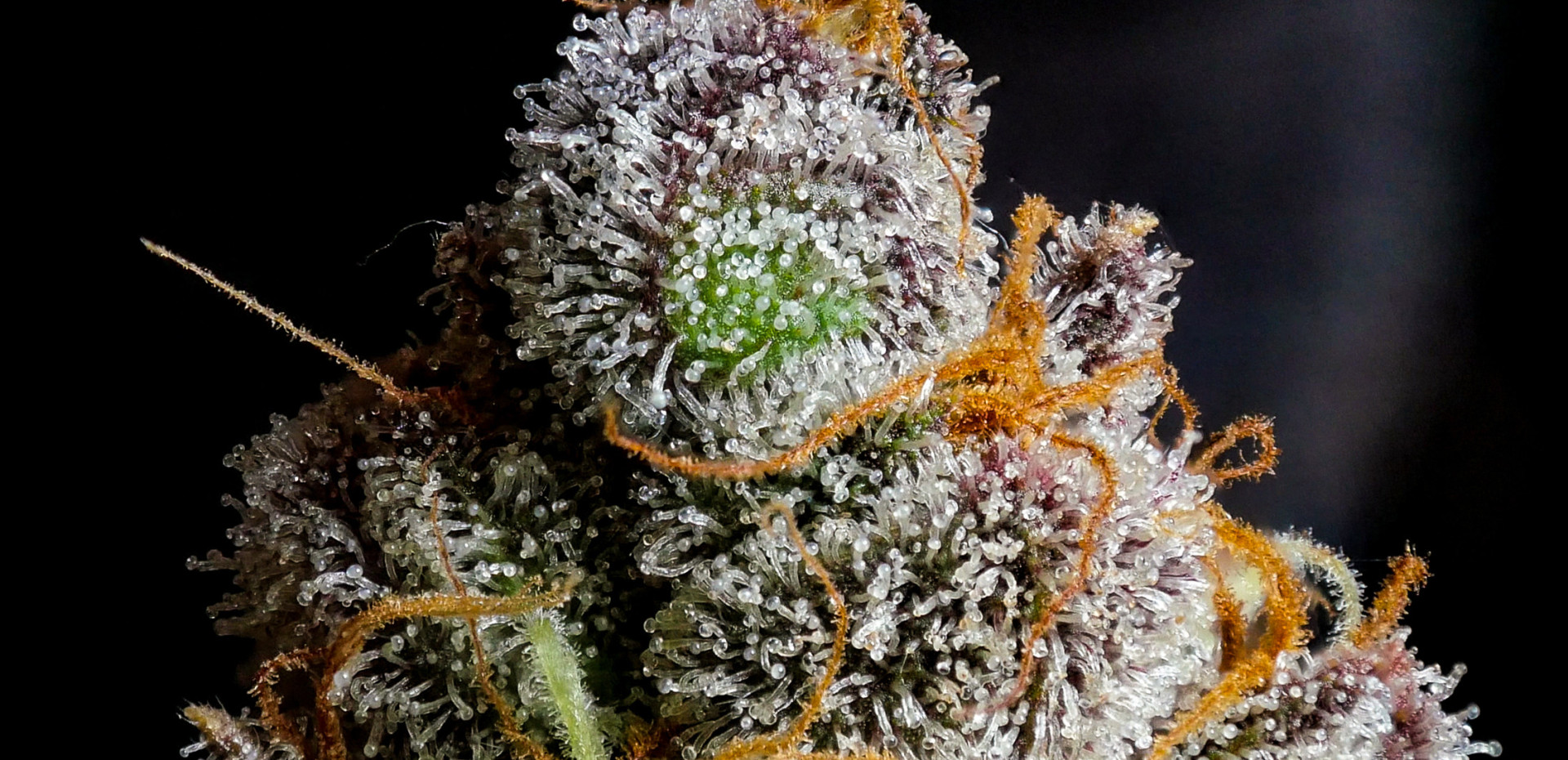
To the naked eye, a resin-rich bud catches the light. Under a magnifying glass or pocket microscope, you can make out the trichomes.
What you should look for are whole, shiny trichomes on their stalks, not a dull, powdery film. A dull, powdery appearance indicates that the trichomes have already broken—due to rough handling or improper transport.
The color of the trichomes indicates maturity at harvest. For more details, see our article on what the plant produces and why.
6. Absence of Seeds and Defects
A commercial flower must contain no seeds. Their presence indicates accidental pollination, which diverts the plant’s energy toward reproduction at the expense of resin production.
Also check for brown spots in the center of the flower, which are often invisible from the outside. Split a flower open if you can —that’s where you’ll see the early signs of mold.
7. Analysis, Last But Not Least
This is intentionally listed seventh. A high CBD level says nothing about the quality of the crop and can easily be achieved with a mediocre flower.
What matters in the report: the lot number corresponding to your purchase, the total THC content, and, most importantly, the test results for pesticides and heavy metals. It’s this last line that protects you, not the percentage prominently displayed on the label.
The cultivation method directly influences these results—it’s also what sets our Swiss and Moroccan terroirs apart.