What exactly is a trichome?
The word comes from the Greek trichoma, meaning “hair.” It refers to all the microscopic growths that appear on the surface of a plant—hairs, scales, glands.
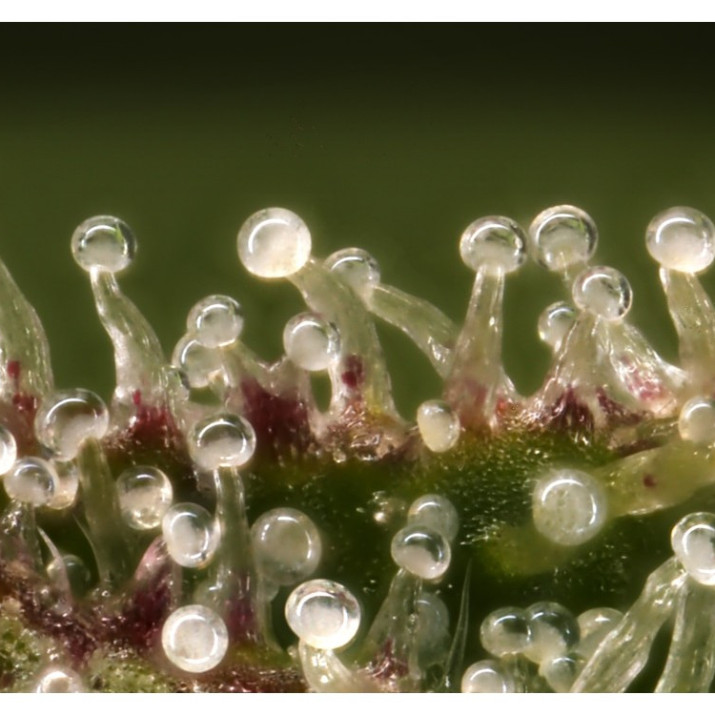
In cannabis, the ones we’re interested in look like miniature mushrooms: a translucent stem topped by a spherical head. It is within this head—and nowhere else—that cannabinoids and terpenes are synthesized.
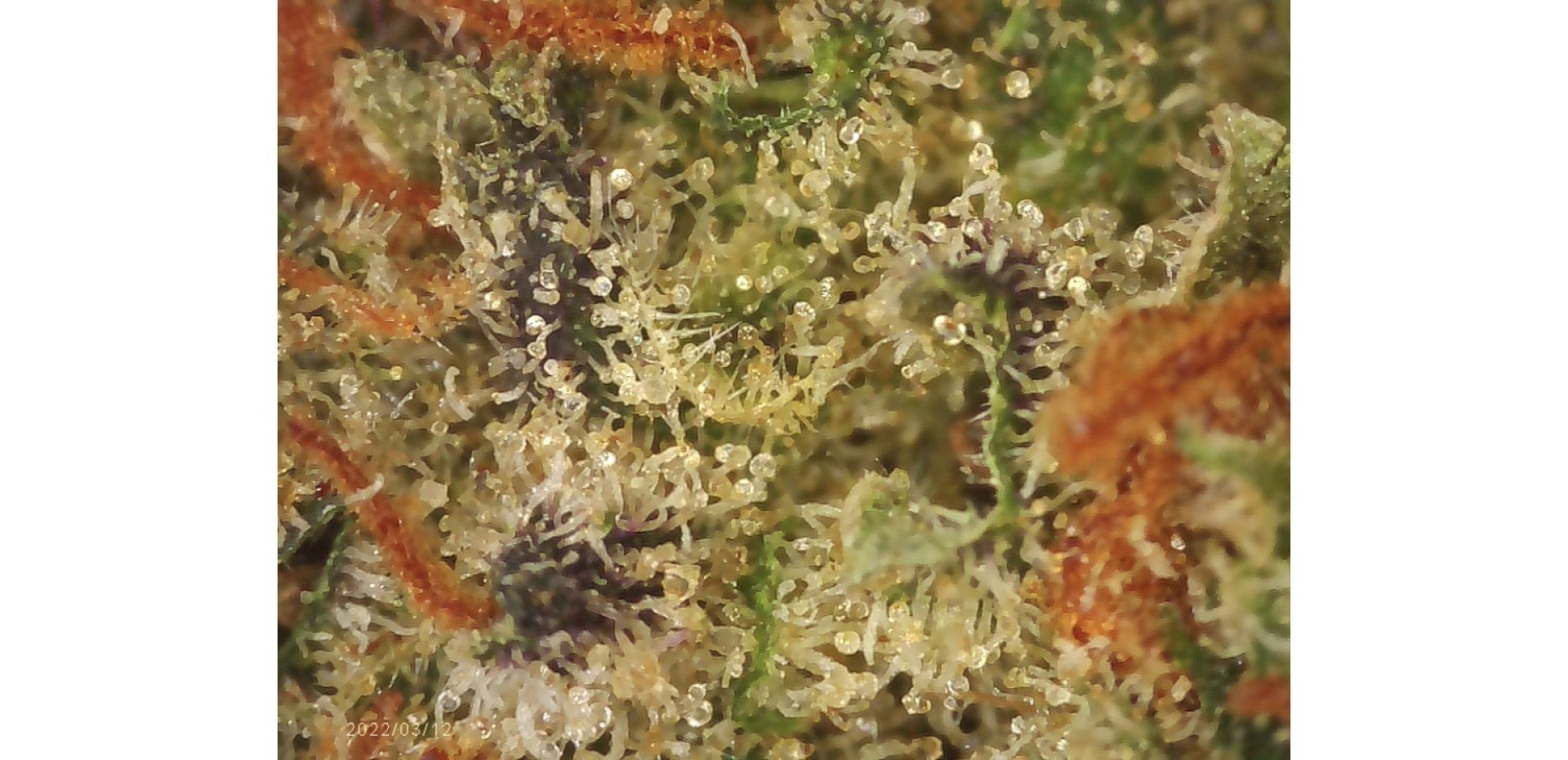
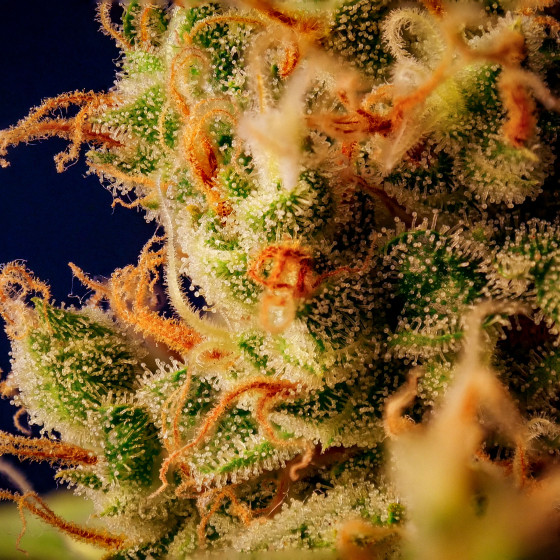
To the naked eye, all you can see is a frosty haze. It takes a high-magnification magnifying glass to reveal what looks like a forest of translucent beads scattered across the flower.
Why the plant produces them
Not out of generosity—but out of necessity. Trichomes fulfill several functions at once.
- UV filter —the resin absorbs solar radiation, acting as a natural sunscreen
- Repellent —for many insects, the scent of terpenes is pungent, even toxic
- Mechanical trap —the sticky surface immobilizes small pests
- Mold inhibitor — certain compounds slow fungal growth
- Water retention — the resinous layer limits evaporation
This leads to a counterintuitive consequence: a plant that is under stress produces more resin than a pampered plant. Wind, temperature fluctuations, high-altitude UV rays, poor soil—each challenge pushes the plant to strengthen its defenses.
This is exactly what we see when comparing our two growing regions.
→ Moroccan CBD hash or Swiss CBD resin?
The three types of trichomes
They’re not all created equal, and only one really matters when it comes to resin.
| Type |
Size |
Significance |
| Bulbous |
The smallest |
Distributed throughout the plant, content virtually negligible |
| Sessile capitula |
Intermediate |
Without a stalk, attached to the surface, significantly more abundant |
| Stalked capitula |
The largest |
The target —the bulk of the cannabinoids and terpenes |
Stalked flower heads concentrate in the bracts—the small leaves that envelop the flowers. This is why a proper extraction starts with the flower tops, never the large leaves: the ratio of active compounds to inert material is worlds apart.
What the Color Reveals
The buds change color as they mature. This is the most reliable indicator of harvest time—far more so than the number of days of flowering.
Translucent. The plant is still in full production. Harvesting at this stage is too early: low yield, grassy aromas, and an underdeveloped flavor profile.
Milky. The buds turn opaque white. This marks the peak of concentration—the window most growers aim for.
Amber. The compounds oxidize and begin to degrade. The aroma becomes heavier, earthier, and sweeter, depending on the strain.
In practice, we almost never harvest at a single, pure stage: we look for a balance. Often, a clear majority of milky buds with a fraction of amber buds, proportioned according to the desired profile.
A serious grower spends the final weeks with a magnifying glass in hand.
A trichome is fragile
This is the point that buyers underestimate the most. These glands detach and degrade at the slightest stress.
Four enemies, always the same:
- Heat —it evaporates the terpenes, and this process is irreversible
- Light —it oxidizes the cannabinoids
- Handling —every bit of friction breaks off trichomes
- Oxygen —it slowly degrades the entire bud
That’s why our flowers are hand-trimmed and hand-dried. And that’s also why you should never freeze a flower intended for consumption: when frozen, the buds become brittle and snap clean off at the slightest touch.
Poor-quality resin is very often the result of good buds being mishandled.