



The Swiss Legal Framework
Since the revision of the Federal Narcotics Act, which took effect in 2011, products with a THC content of less than 1% are not considered narcotics in Switzerland.
The Federal Office of Public Health regulates production. Specifically: sales are permitted to individuals 18 years of age and older, without a prescription; sellers must be registered; products must be labeled as tobacco substitutes; and no therapeutic claims are permitted.
This framework has one key advantage: it has remained stable for over ten years.
Europe does not have a single rule
Switzerland’s 1% limit is often contrasted with Europe’s 0.3% limit. This is incorrect.
The Czech Republic also applies a 1% threshold —and it is part of the European Union. It raised its limit from 0.2% to 1%, aligning itself with Switzerland rather than with its neighbors.
Conversely, Luxembourg remains at 0.3% for CBD products, while being the first EU country to authorize personal cultivation at home.
Two countries in the same union, two opposing approaches. The 0.3% threshold governs hemp cultivation, but each country then legislates as it sees fit.
This patchwork has a direct impact on your safety: some countries serve as gateways for products that neither Switzerland nor France would authorize. It is through this channel that synthetic cannabinoids sold under the “CBD” label circulate.
The Specific Case of France
Since the Council of State’s decision in January 2023, the sale of CBD flowers and leaves has been authorized in France, provided that the finished product contains less than 0.3% THC.
The French market is therefore fully legal but more restrictive: the THC limit restricts the choice of strains, no therapeutic claims are permitted, and inspections focus on the finished product.
For a French consumer, the question isn’t “Swiss or French” but “Is this product compliant, and can I prove it?”
The concrete advantages of Swiss CBD
A stable legal framework. More than ten years without major changes, allowing for long-term investment in strain selection.
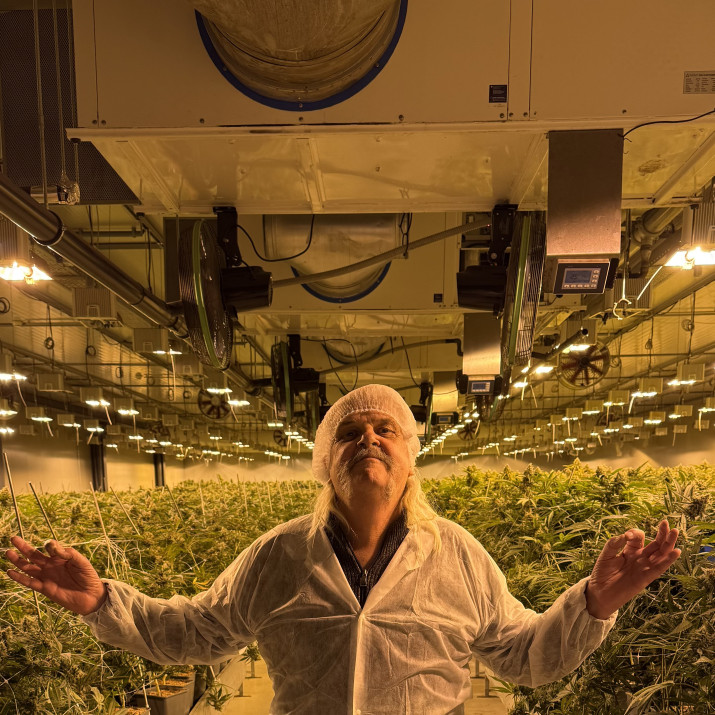
Favorable growing conditions. A temperate climate, low-pollution soils, and—for indoor cultivation—reliable electricity that enables constant climate control.
Systematic testing. ISO 17025 -accredited Swiss laboratories establish a complete profile of cannabinoids and terpenes.
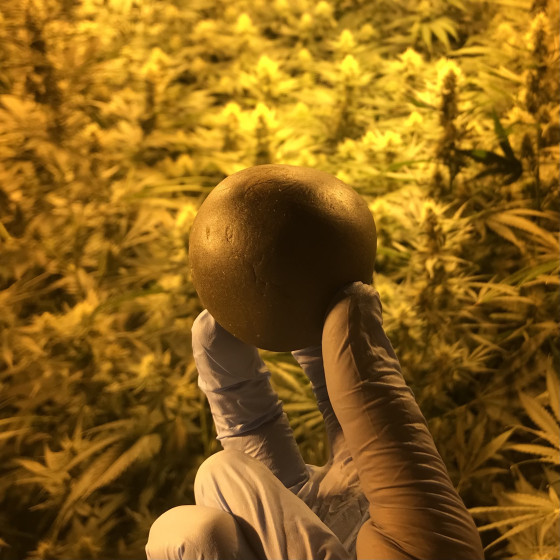
Verifiable traceability. For our Swiss resins, the original flower is sold alongside its resin—you can compare the two analyses.
How to Verify That CBD Is Truly Swiss
This is where it really matters. The word “Swiss” is used far more often than it deserves to be. Four checks are essential.
Ask where the flower was grown, not where the resin was pressed. Many so-called “Swiss” resins are made from imported flowers that are simply sifted here. The process is legal, but the label is misleading.
Insist on seeing the certificate of analysis. A legitimate COA includes the name of an accredited laboratory, a date, and a lot number thatmatches the product you purchased.
Verify that the batch is traceable. A producer who stands behind their product numbers their batches.
Look for visual proof. A photo of the finished product proves nothing. A video of cultivation, harvesting, or extraction— that’s something you can’t fake.
Frequently Asked Questions
Is Swiss CBD legal in France?
Yes, if the finished product contains less than 0.3% THC. A product with a THC content between 0.3% and 1% is legal in Switzerland but illegal in France.
Is Switzerland the only country with a 1% threshold?
No. The Czech Republic applies the same threshold, even though it’s in the EU. Australia and Canada do as well.
Why is Swiss CBD more expensive?
Higher energy, labor, and real estate costs, plus systematic testing. It’s not a brand premium—it’s a cost structure.
Does a higher THC content make the product stronger?
No. At 1%, THC remains well below the threshold for psychoactive effects. What changes is the range of cultivable genetics.
Does “Made in Switzerland” mean “grown in Switzerland”?
Not necessarily—and that’s what you need to check. Always ask about the plant’s origin.


