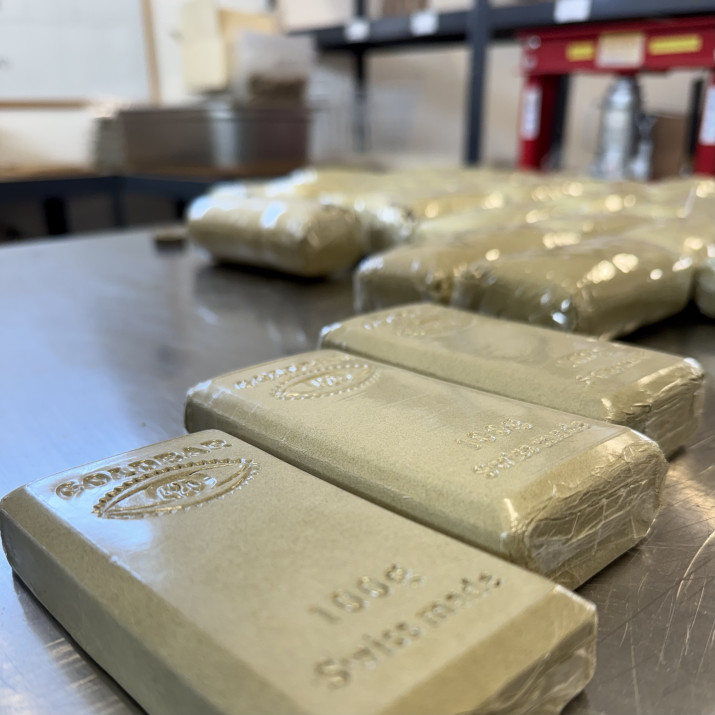
1. Producer or intermediary: the question that shapes everything
This is the first step in sorting, and it comes down to one question: “Who grew the raw material for this batch?”
A producer answers with a location, a season, or a farm. A middleman answers with a country—or changes the subject.
It’s not a matter of prestige. A middleman has no control over consistency, the schedule, or what was done to the plant before he received it. The day your customer asks why the March batch doesn’t resemble the January one, he won’t have the answer—and neither will you.
2. Analysis by batch, not by catalog
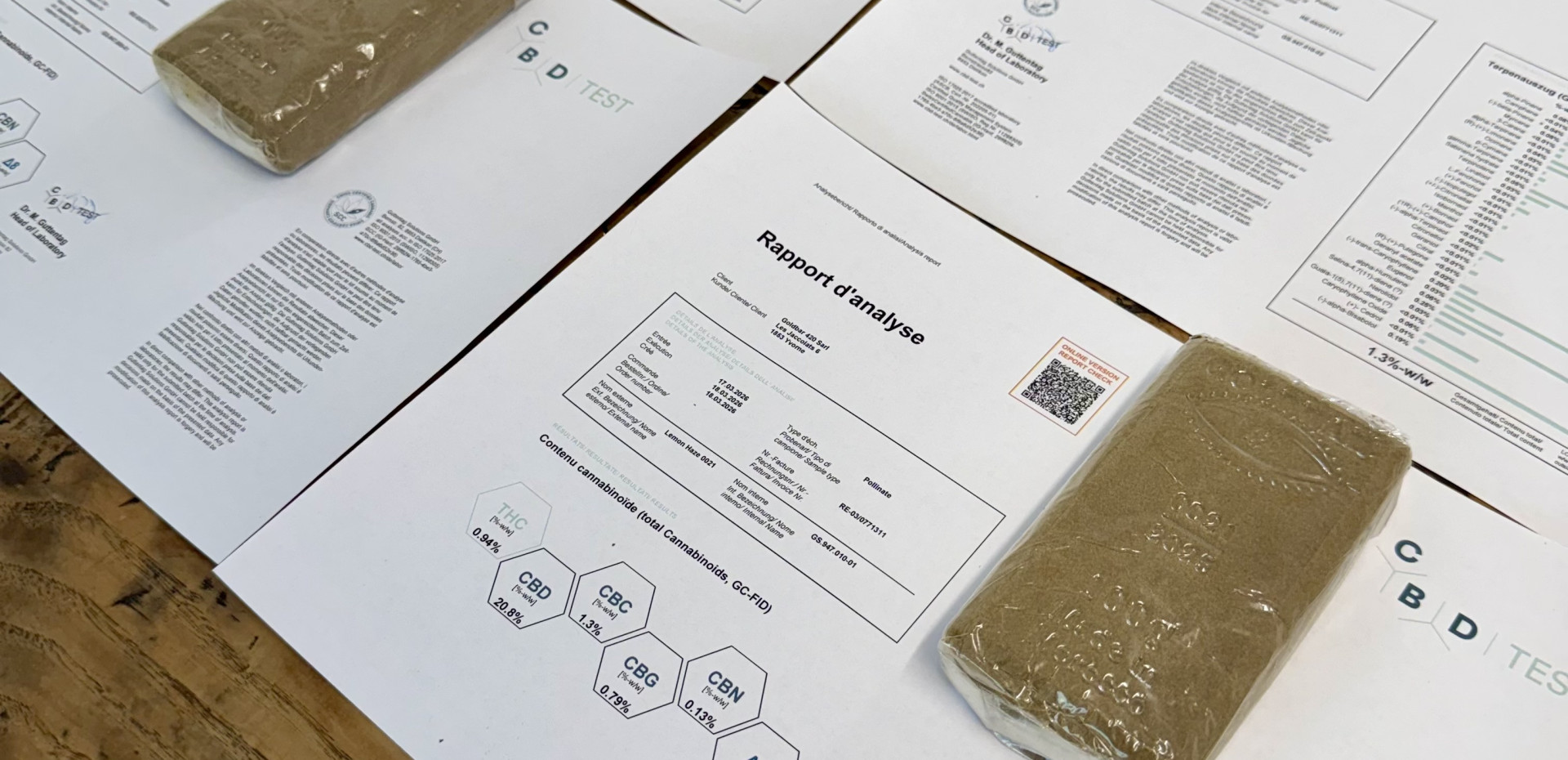
An analysis certificate is only valid if it bears the lot number of the batch you receive. This is the point where most suppliers settle for a generic document.
What the document must include:
- The name of the laboratory, its date of issuance, and its accreditation;
- A batch number that can be traced back to the physical product;
- The levels of CBD and total THC, including THCA—it is the total that is used as the basis for verification;
- Testing for pesticides, heavy metals, and microbiological contaminants.
The fourth point is the one that truly protects you, and it’s also the one most often omitted. A high CBD level says nothing about what was sprayed on the crop.
3. Compliance varies depending on your market
The same batch can be fully compliant in Switzerland but illegal in France. The THC threshold is different, and so is the method of calculation.
Before placing any order, two checks are essential: the applicable threshold in your country of resale, and whether the analysis explicitly mentions it. A reputable supplier knows the thresholds for your markets —if they leave you to handle this issue on your own, they’ll also leave you to handle the testing on your own.
Details on the differences between markets can be found in our article on the regulations that distinguish Switzerland, France, and the European Union.
4. Consistency—Something No One Can Promise
This is the criterion that new resellers discover too late. Selling an excellent resin once is worthless if you can’t offer it again in three months.
Your customers come back for a specific product. A supplier who changes sources with every order forces you to rebuild your sales pitch every time you restock—and to lose the customers who had found exactly what they were looking for.
Two questions to ask: how many harvests per year, and how much of a given batch is kept in stock. A producer should be able to answer to the nearest kilo.
5. Terms and conditions to clarify before ordering
- The minimum order quantity —and whether it applies per item or overall;
- The actualvolume discounts, not just the advertised ones;
- Shippingtimes and the carrier;
- How disputes over a batchare handled —return, credit, or nothing;
- Sample merchandise, essential before placing an initial bulk order.
Always request a sample before placing your first substantial order. A supplier who refuses to send a few grams to a professional has a reason for doing so.
6. Fraud specific to the wholesale market
The methods used to tamper with CBD hash are the same as in the retail market, but they arrive at your doorstep in bulk—and you’re the one reselling them.
Three types are most common: enriching with isolate to inflate the concentration, texture agents that add weight and a nice suppleness, and synthetic terpenes that mimic a missing aroma.
Practical steps for detecting these upon receipt are detailed in our article on common market frauds. Be sure to perform these checks systematically on every incoming batch before putting it on the shelf.